
REAP Principle 28: Learn to Love Dealing With Large Amounts of Money and the People Who Have It
Most real estate investors are comfortable with small checks and small rooms. They tell themselves they will work up to the bigger deals once they have more experience, more equity, or more confidence. That day rarely arrives. REAP Principle 28 makes the point directly: your comfort level with capital is not a feeling you wait for. It is a ceiling you have chosen.
Your comfort level with capital is a ceiling. The deals available to you are determined by the rooms you are willing to enter.
This is not a beginner problem. Experienced operators carry this ceiling with them for years. The principle this week, drawn from Sam Zell's book "Am I Being Too Subtle?" and applied through the REAP lens, is about changing that. Not eventually. Now.
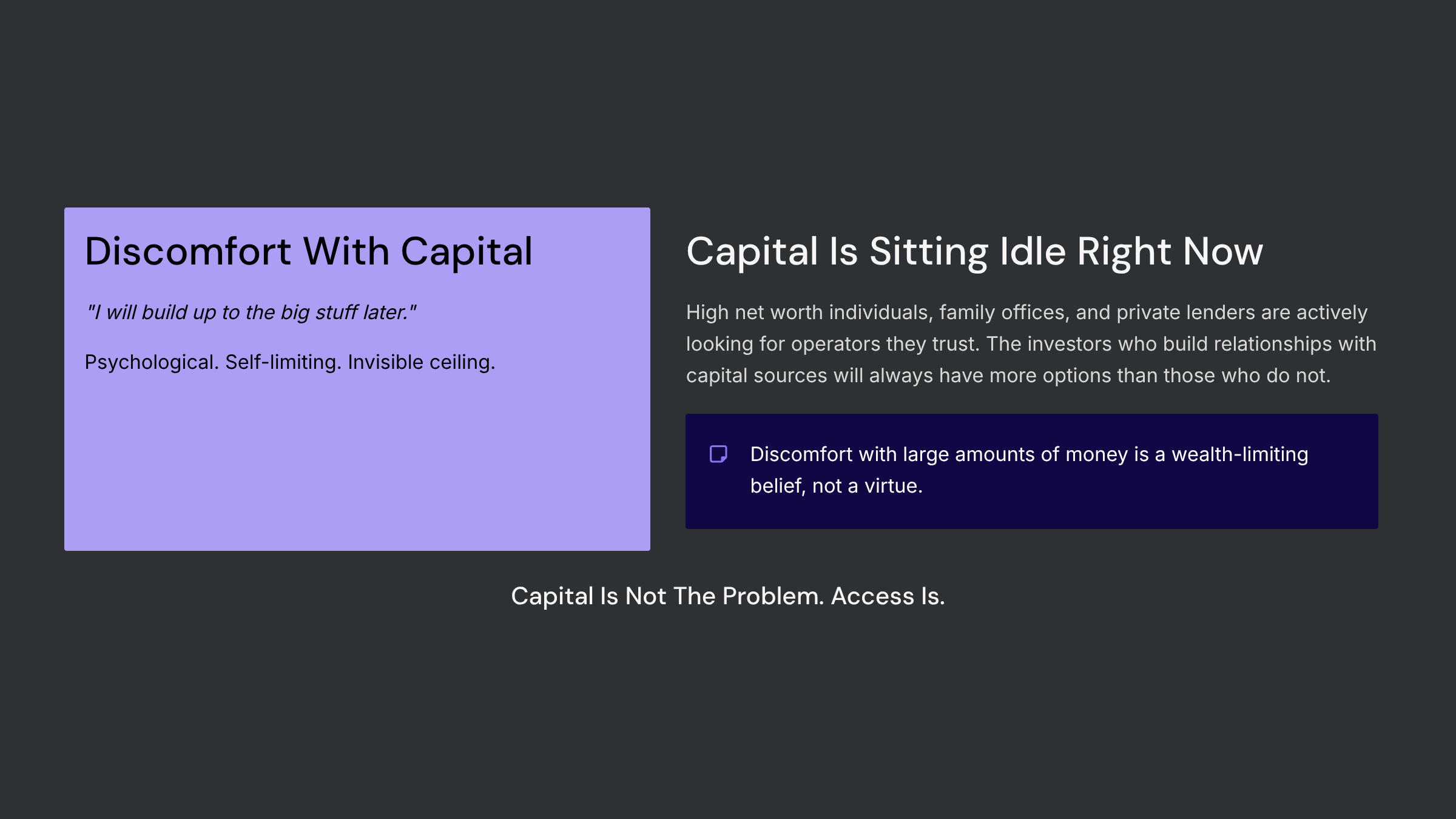
Capital Is Not the Problem. Access Is.
There is no shortage of capital searching for operators. High net worth individuals, family offices, and private lenders are actively looking for people they can trust right now. The constraint is not the money. It is the relationship.
Most investors sit on the wrong side of this problem and never see it clearly. They blame limited deal flow on market conditions, pricing, or competition. But the deeper issue is usually simpler: they have never built a relationship with anyone who controls serious capital because they have been waiting to feel ready first.
Discomfort with large amounts of money is a wealth-limiting belief, not a virtue. Waiting to feel ready is how you stay small.
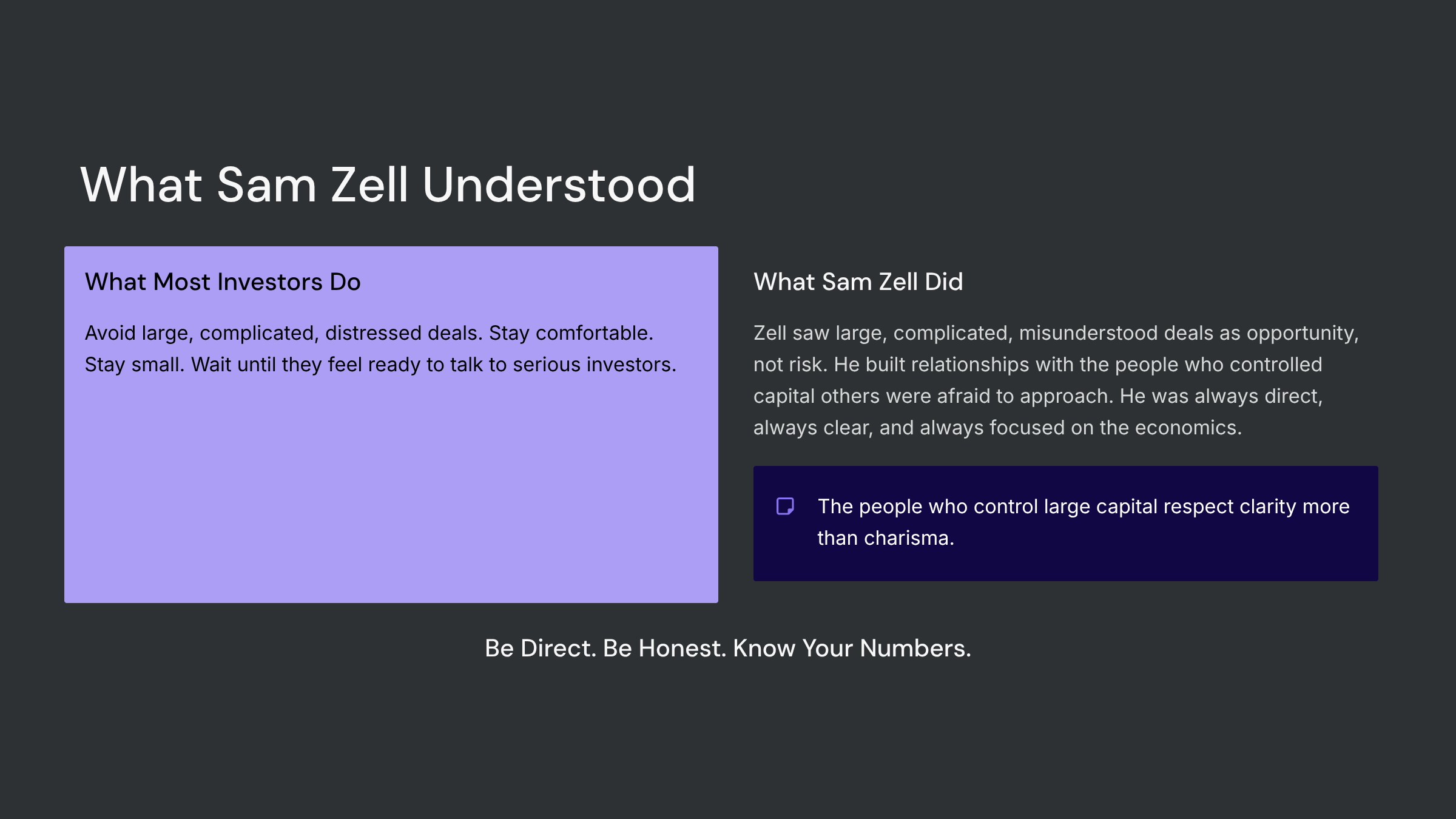
What Sam Zell Understood That Most Investors Do Not
This week's book of the week is "Am I Being Too Subtle?" by Sam Zell. It is a firsthand account of how one investor built a multi-billion dollar portfolio by consistently going where others refused to go.
Most investors avoid large, complicated, distressed deals. They stay comfortable. They wait until they feel ready to talk to serious capital sources. Zell did the opposite. He saw complicated, misunderstood deals as opportunity rather than risk. He built relationships with the people who controlled capital others were afraid to approach. And he was always direct, always clear, always focused on the economics.
The lesson is not to be contrarian for its own sake. It is to understand that the people who control large capital respect clarity more than charisma. Be direct. Know your numbers. Do not apologize for your ambition.
Every Stage of Your Portfolio Requires Capital Relationships
There is an eight-stage portfolio lifecycle that every serious investor moves through: earning active income, acquiring income-producing assets, building equity, improving operations, refinancing or selling, converting equity to passive income, moving into private lending or passive structures, and finally protecting capital and building legacy.
Capital relationships are not optional at any stage. They determine how fast and how far you move. The trust you build at Stage 2 is what opens doors at Stage 5 and Stage 7. The investor who waits until Stage 6 to start thinking about capital relationships has already fallen behind.
This is where the four-tier capital framework matters. Where your capital sits, and who has access to it, shapes what is possible at each stage. That access is not given. It is built.
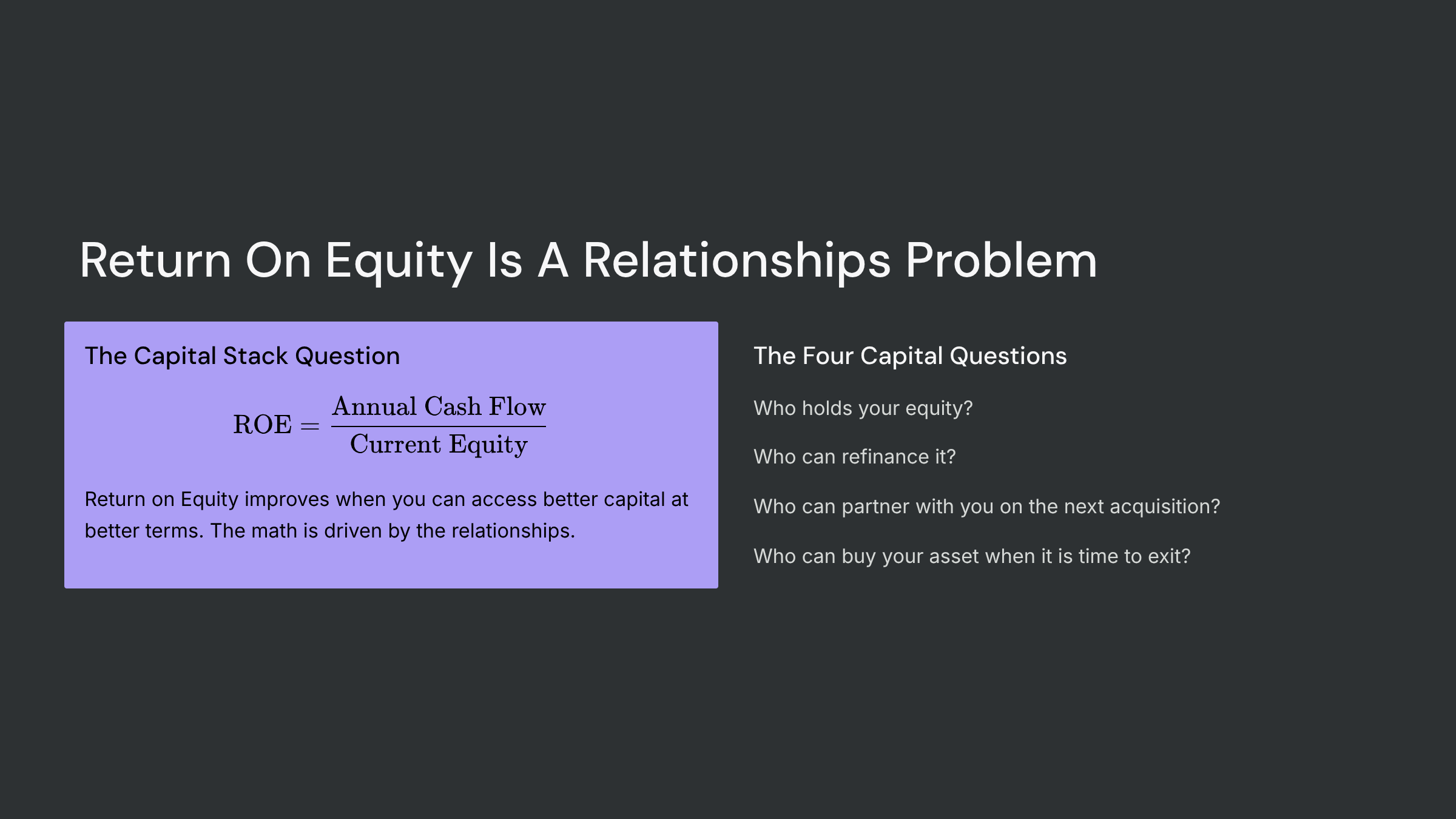
Return on Equity Is a Relationships Problem
Here is the question most investors are not asking: who holds your equity, who can refinance it, who can partner with you on the next acquisition, and who can buy your asset when it is time to exit?
Your return on equity on every property you hold is not purely a math problem. It improves when you can access better capital at better terms. And that access is driven entirely by relationships. The ROE Audit gives you the numbers. Capital relationships give you the leverage to move those numbers.
If your equity is sitting idle in assets that are no longer producing at the level they should, part of the answer is a dead equity conversation paired with access to the right capital partner on the other side of that move.
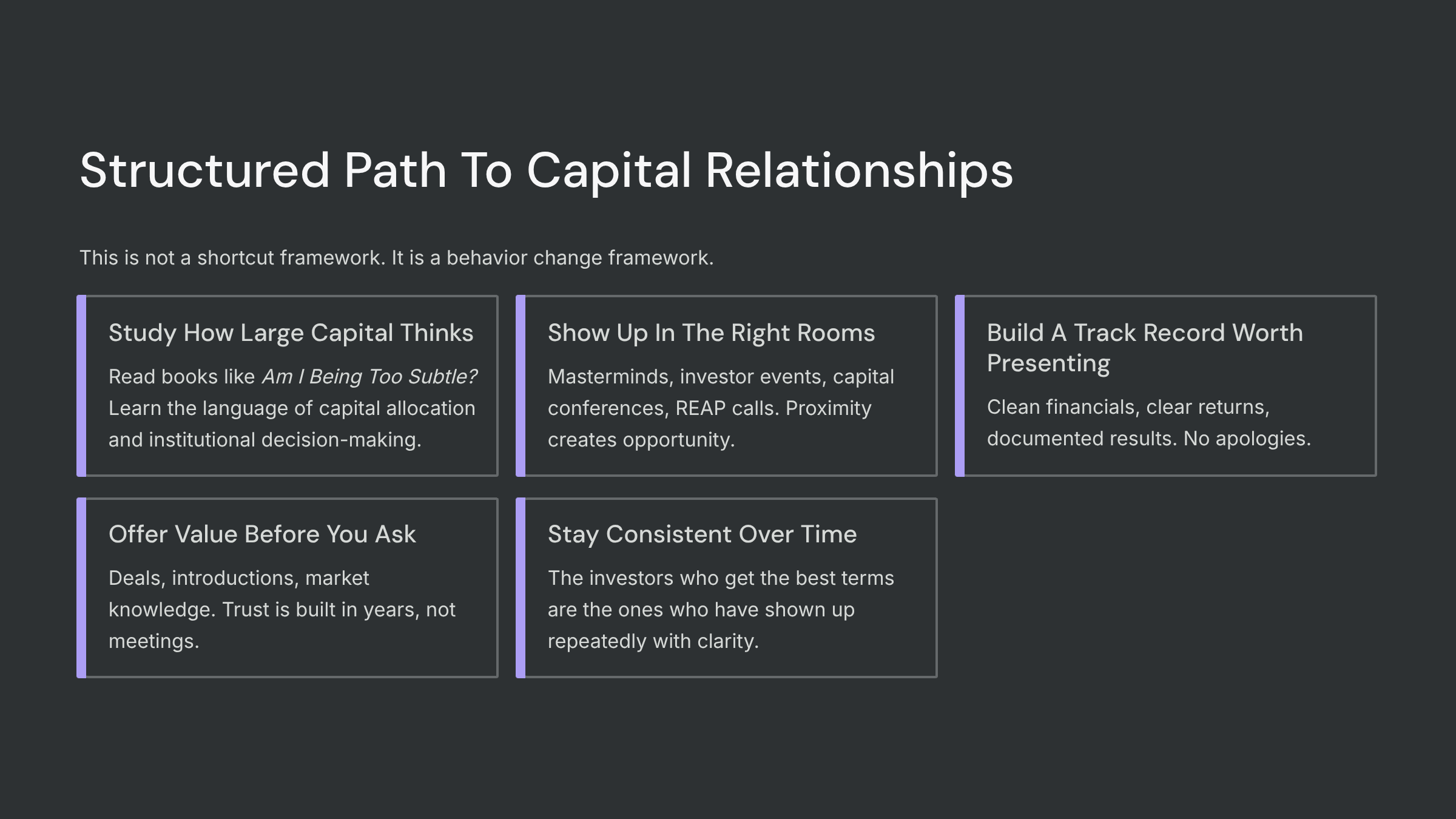
How to Build the Relationship Before You Need It
This is not a shortcut framework. It is a behavior change framework built around three commitments.
Study how large capital thinks. Books like "Am I Being Too Subtle?" teach you the language of capital allocation and institutional decision-making. Then show up in the right rooms: masterminds, investor events, capital conferences, and community calls where serious operators gather. Proximity creates opportunity.
Then prepare the track record worth presenting. Clean financials, clear returns, documented results. No apologies. When you have that in hand, offer value before you ask. Bring deals, introductions, and market knowledge. Trust is built in years, not meetings.
The investors who consistently access the best terms are the ones who have shown up repeatedly with clarity. Developing a banker mindset helps here. When you learn to think like a capital allocator rather than an operator, the conversation you bring to serious investors changes entirely.
What Keeps Experienced Investors Out of the Right Rooms
These are not beginner mistakes. Experienced operators make all of them regularly.
Waiting to feel ready. The track record gets built in the room, not before you enter it.
Pitching before trust. Serious capital partners are not looking for a pitch. They are looking for an operator they can rely on over time.
Sloppy track record. Presenting no track record, or a disorganized one, signals immediately that you are not operating at their level.
Vague about the economics. Being unclear about your returns, debt structure, or capital strategy destroys credibility the moment it surfaces.
Treating relationships as transactions. Large capital relationships are long-term partnerships. Approaching them as one-time asks closes doors permanently.
Actionable Takeaways
Run the Steadiness of Equity Exercise. For each asset in your portfolio, document current value, current debt, current equity, annual cash flow, return on equity, and the capital relationship that could improve the outcome at each stage. The clarity this produces is not pressure. It is direction.
Identify three people. Find three individuals in your market who have access to serious capital. Know who they are before you approach them. Study what they care about: returns, risk management, asset quality, and operator reliability. Speak to their priorities, not yours.
Prepare your one-page summary. A clean summary of your track record and current portfolio. Documented. Clear. No apologies.
Find one room in the next 30 days. One event, call, or mastermind where those capital relationships will be present. One room. One next step.
Show up focused on value. Not on what you need. On what you can offer. Deals, introductions, knowledge, and clarity are currencies in the rooms where serious capital lives.
Comfort with large capital compounds over time. The investors who start building these relationships now are the ones who will have options at every stage of the lifecycle. Start now.
Further Reading
ROE Audit: How to Know If Your Portfolio Is Quietly Underperforming - Run the numbers that tell you whether your current portfolio is earning what it should before you start building new capital relationships.
Four Tiers of Capital: How Serious Investors Stack Their Money - Understand how capital is structured at the level where REAP Principle 28 operates, and where your current capital sits within that stack.
The Banker Mindset: Why the Safest Investors Stop Thinking Like Operators - The shift from operator to capital allocator is the mindset change that makes serious capital relationships possible.
Ready to Go Deeper?
REAP calls happen every Saturday at 10:00 AM ET. If you missed this session or want to bring your capital relationship questions to the room, this is where that conversation happens.
You can also book a Return on Equity conversation to evaluate your current portfolio position, identify where capital relationships would change your returns, and build a capital strategy before the next stage of your portfolio demands one.
The people you get comfortable with change what is possible. That work starts now.